Speech Sound Guide
The F Sound: Norms, Challenges & Word Lists
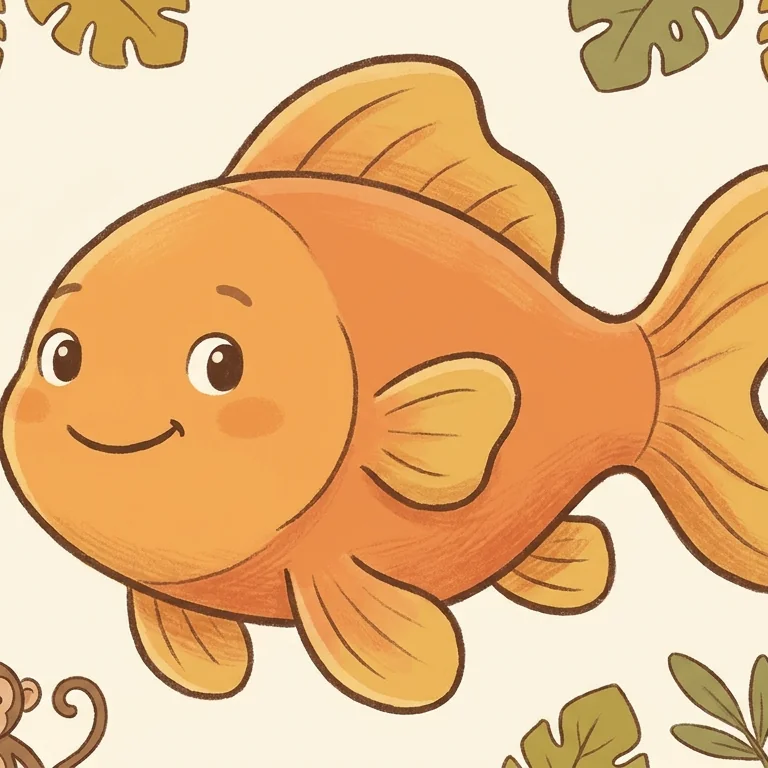
The /f/ sound typically develops by age 4. This guide covers when /f/ develops, what typically goes wrong, simple ways to practice it, and over 85 /f/ words organized by position.
When should a child say /f/?
Developmental norms — when the /f/ sound typically emerges and is mastered.
Source: McLeod & Crowe (2018), AJSLP.
A child still substituting or distorting /f/ after age 4 is a good candidate for a speech-language evaluation — earlier if they're hard to understand or frustrated.
Find out where /f/ stands — in 5 minutes
Sound Safari's 23-sound screener checks against the McLeod & Crowe norms above.
Common challenges with /f/
What typically goes wrong — and whether it's age-appropriate.
Stopping
/f/ → /p/
Typically resolves on its own by around age 4; worth a check-in if it persists.
What helps →
Stretch /f/ as a long "fffff" — /f/ is a fricative (can be held), /p/ is a stop (quick release). Have the child blow air against their lip.

How to practice the /f/ sound
Practical starting points for parents and SLPs. Always follow your SLP's plan if your child is in therapy.
- 1 Bottom lip touches top teeth. /f/ is made by touching the top teeth lightly to the bottom lip, then blowing air through the gap. Show the position in a mirror.


- 2 Stretch it long. /f/ is a fricative — it can be held continuously. Practice "fffff" while the teeth-and-lip position stays still. This breaks the stopping habit.
- 3 Feel the air on a finger. Hold a finger in front of the mouth — /f/ should produce a steady stream of air. If it's a quick puff, that's /p/, not /f/.
- 4 Silent /f/. /f/ uses no voice — just air. Touch the throat: silent for /f/, buzzy for /v/. /f/ should be a gentle "ffff" without any hum.
- 5 Minimal pairs. Use pairs like fan/pan, four/pour, fork/pork so the child hears /f/ (long airflow) vs /p/ (quick pop) and learns to choose.
/f/ word lists by position over 85 words
Every word from the Sound Safari practice library. The /f/ in each word is bolded.
Initial — /f/ at the start of the word (30)
Medial — /f/ in the middle of the word (29)
Final — /f/ at the end of the word (30)
IEP goals for /f/
A starting point for SLPs writing articulation goals — across the six therapy levels.
Goal progression — tap a level to see the goal
Sample goal — word level
"Given a verbal model, [student] will produce /f/ in the initial position of words with 80% accuracy across 3 consecutive sessions."
Track /f/ progress automatically
Sound Safari logs every trial against your goals and writes the SOAP note for you.
/f/ sound — frequently asked questions
At what age should my child say the /f/ sound? +
Most children produce /f/ correctly by age 4. About half can do it by age 3. /f/ is one of the earlier fricatives to develop.
Is it normal for my child to say "p" for "f"? +
Yes — stopping (saying "p" for "f", like "pish" for "fish") is developmentally typical up to about age 3. If it persists past age 4, it's worth a check-in.
Why is the /f/ sound hard? +
/f/ requires sustained airflow through a precise lip-and-teeth position. Children who stop /f/ to /p/ haven't learned to keep the air flowing yet.
How can I help my child practice /f/ at home? +
Show the lip-and-teeth position in a mirror, blow air against a feather or a finger to feel the airflow, and use minimal pairs (fan/pan) to train stretching the sound.
When should we see a speech therapist about /f/? +
If /f/ is being replaced with /p/, /v/, or omitted after age 4, see an SLP.
Can older children and adults still correct /f/? +
Yes — /f/ is highly treatable at any age. The lip-and-teeth position is visible and easy to demonstrate.
Related sounds
Sounds that pair, contrast, or are commonly confused with /f/.