 Sound Safari
The Home Sound Check
A quick picture check you run at home: your child names pictures, you tap what you hear — and Sound Safari shows which speech sounds are on track for their age, then builds a practice plan from the result.
 14-day free trial · Cancel anytime
Scanned this from a family’s check summary? This is the app that made it.
About 5 minutes
Built for ages 3 and up, one sitting, no prep.
You score it live
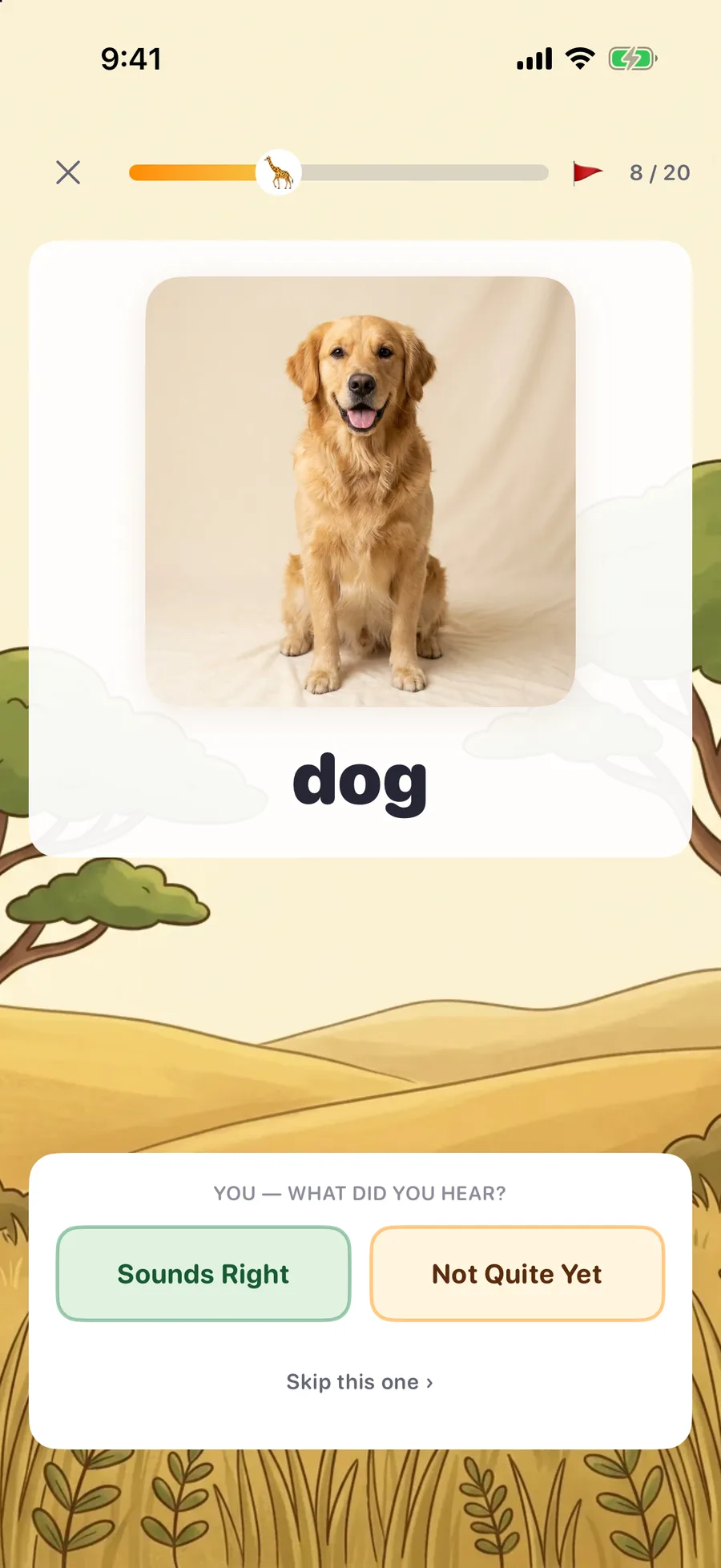
Your child names each picture; you tap what you hear.
The plan builds itself
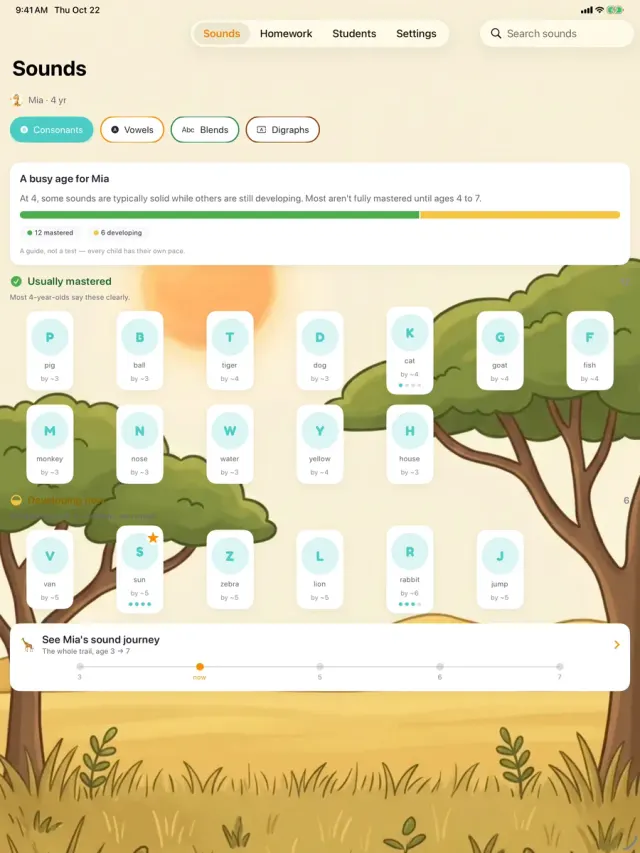
Age-based results become daily practice, automatically.
Try it with one word

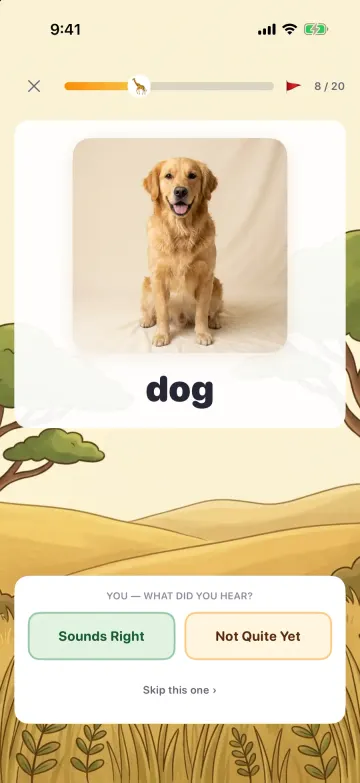
Ask your child to name this picture — what did you hear?
That’s the whole check — a picture at a time, about five minutes. The app picks the sounds that matter at each age.
The real check works just like this
It ends in a summary you can share
Age-based results, sound by sound — the same card families text to a co-parent, grandparent, or teacher.
A home check isn’t an evaluation — if anything looks worth asking about, a speech-language professional can tell you more.
 Sound Safari Sample
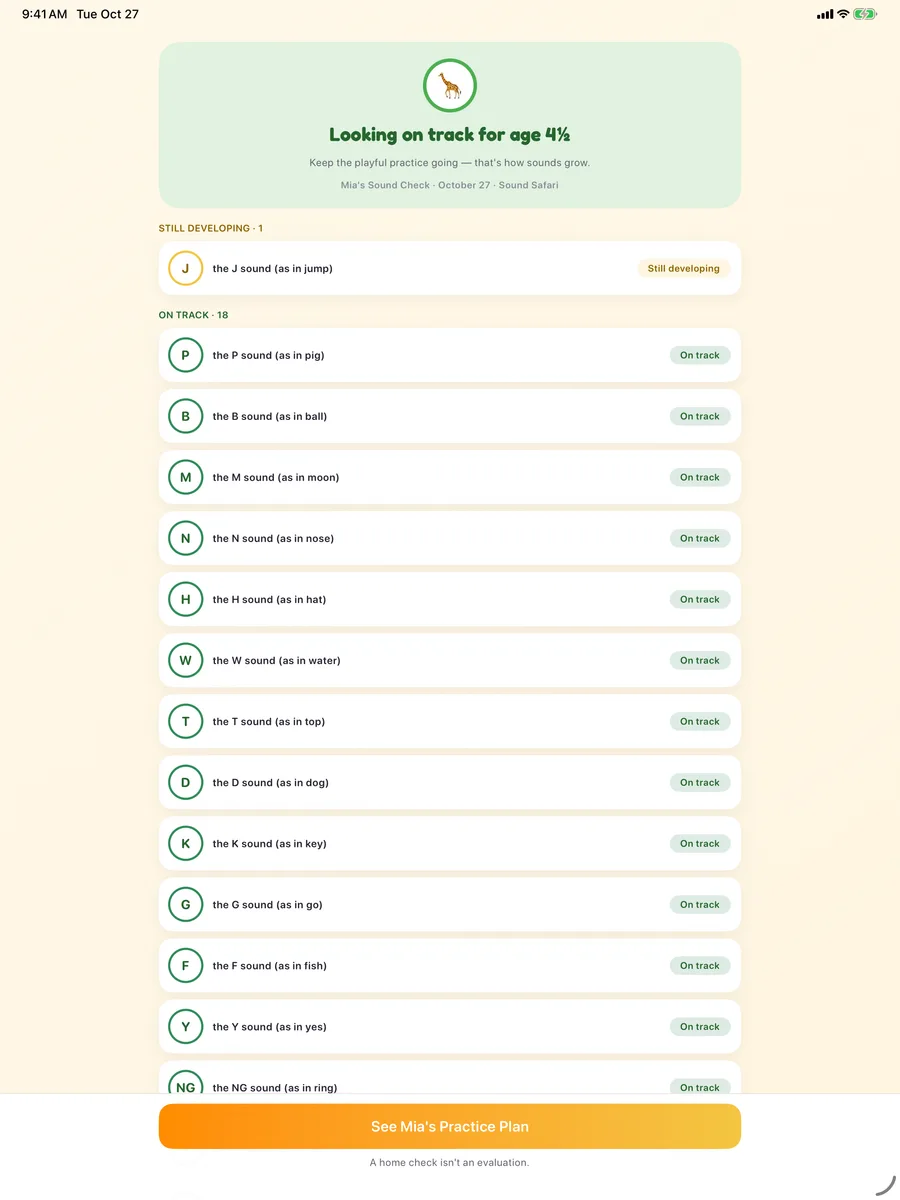
Looking on track for age 4½
-
 the K sound (as in key) On track
- the P sound (as in pig) On track
-
 the S sound (as in sun) Still developing
Every sound lands in one of three lanes: On track · Still developing · Worth asking about.
Free guides for parents
What’s typical at each age, when a sound is worth asking about, and how to practice R, S and L at home.
- Speech Sound Milestones by Age: A Parent Guide When each speech sound should develop from age 2 to 7, what intelligibility to expect, which errors are normal, and when to consider a speech evaluation.
- When to See a Speech Therapist for Your Child When a speech concern is worth acting on: the signs by age (18 months to 7) and the free US routes — Early Intervention and the school district.
- /R/ Sound Speech Therapy: Rhotacism & Vocalic R What rhotacism, gliding and derhotacization sound like, the 7 vocalic R contexts, retroflex vs bunched placement, therapy steps and word lists by position.
- /S/ Sound Speech Therapy: Frontal & Lateral Lisps Complete /s/ sound speech therapy guide: frontal vs lateral lisp, developmental norms, therapy progression, word lists by position, and 15+ minimal pairs. For parents and SLPs.
- /L/ Sound Speech Therapy: Light vs Dark L, Blends Complete /l/ sound therapy guide: light vs dark /l/ tongue placement, developmental norms, therapy progression, /l/-blends, word lists, and minimal pairs. For parents and SLPs.



Try Sound Safari free for 14 days
Tap on iPhone or iPad